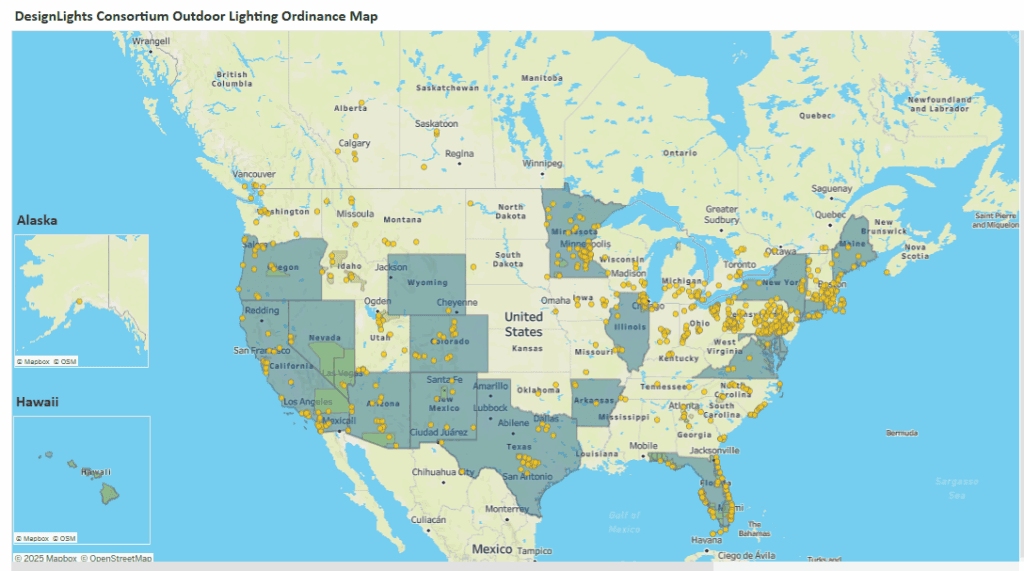
Local regulations designed to mitigate outdoor light pollution are popping up across the US and Canada. So far, the DLC has mapped nearly 950 communities and counties in 53 provinces and states (plus the District of Columbia) where local authorities have enacted outdoor lighting ordinances or bylaws. Add the many hundreds more ordinances that exist but aren’t yet mapped, and that’s a huge swath of the continent where city and town planners, municipal procurement staff and other public officials are charged with ensuring that the outdoor lighting they select and install doesn’t mar the night sky for residents and the local environment
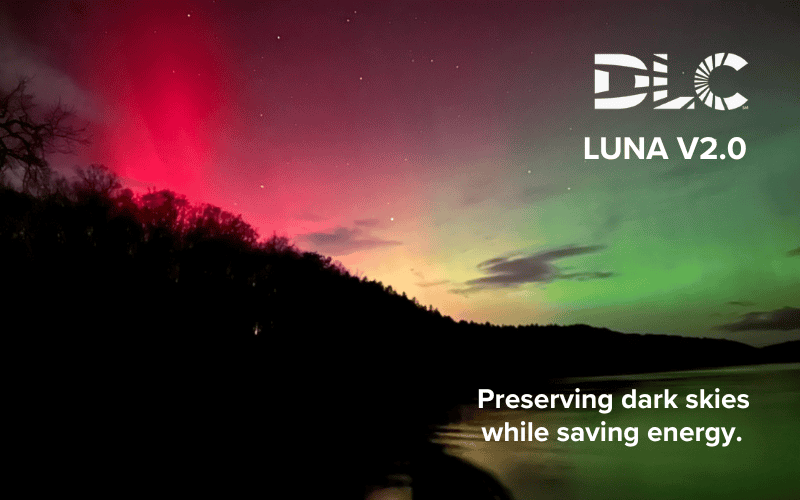
In November, the DLC released a significant update to its Light Usage for Night Applications (LUNA) program that’s meant to improve outcomes for all cities and towns and facilitate compliance in the growing number of communities with dark-sky ordinances.
Scheduled to take effect in early January, the DLC’s new outdoor lighting technical requirements are designed to make the job easier—resulting in better, more sustainable lighting that’s also eligible for incentives and rebates from most utilities and energy efficiency programs across North America.
Developing the LUNA Program
The DLC launched LUNA in 2021 to address growing concern and research over a rapid increase in light pollution by about 10 percent annually. Since then, over 450 outdoor LED products have been placed on the LUNA Qualified Products List (QPL). LUNA performance requirements apply to specific categories of outdoor, non-residential LED lighting that saves energy while supporting dark sky goals.
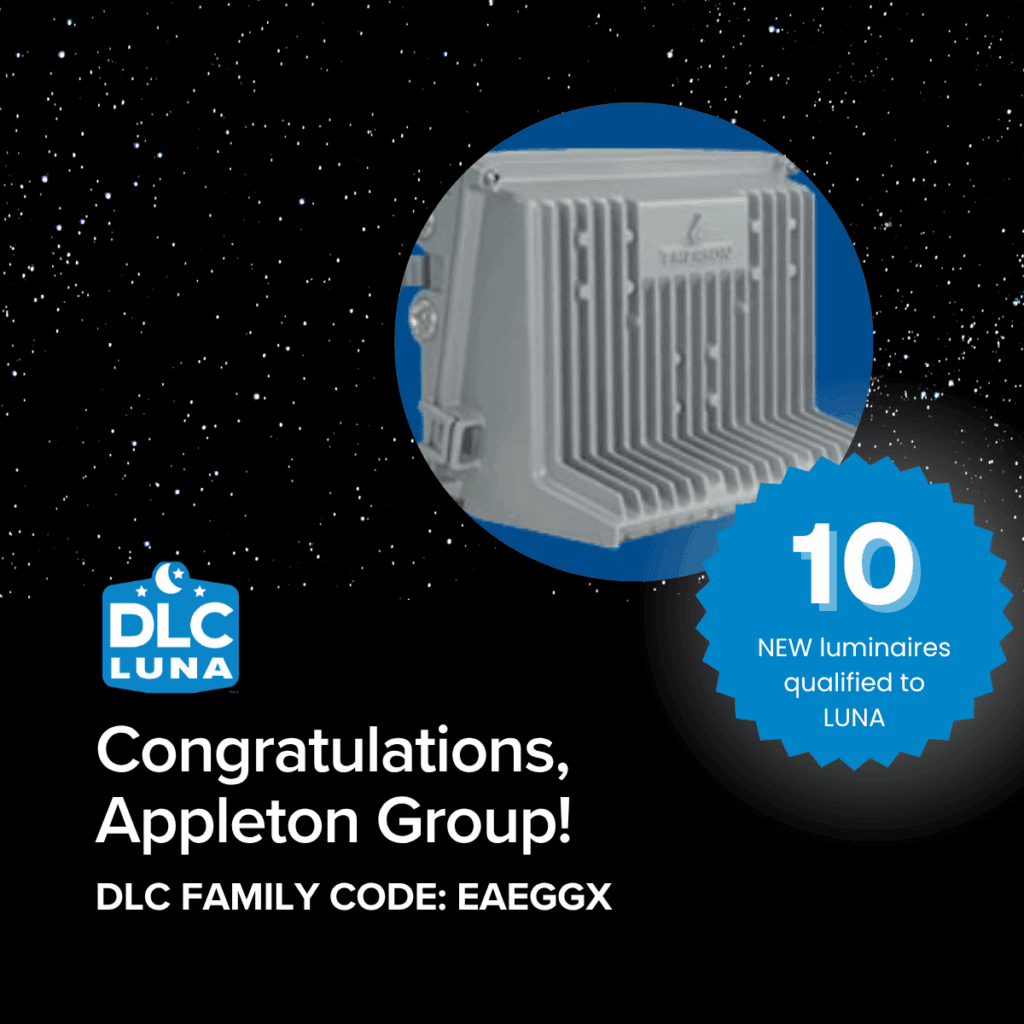
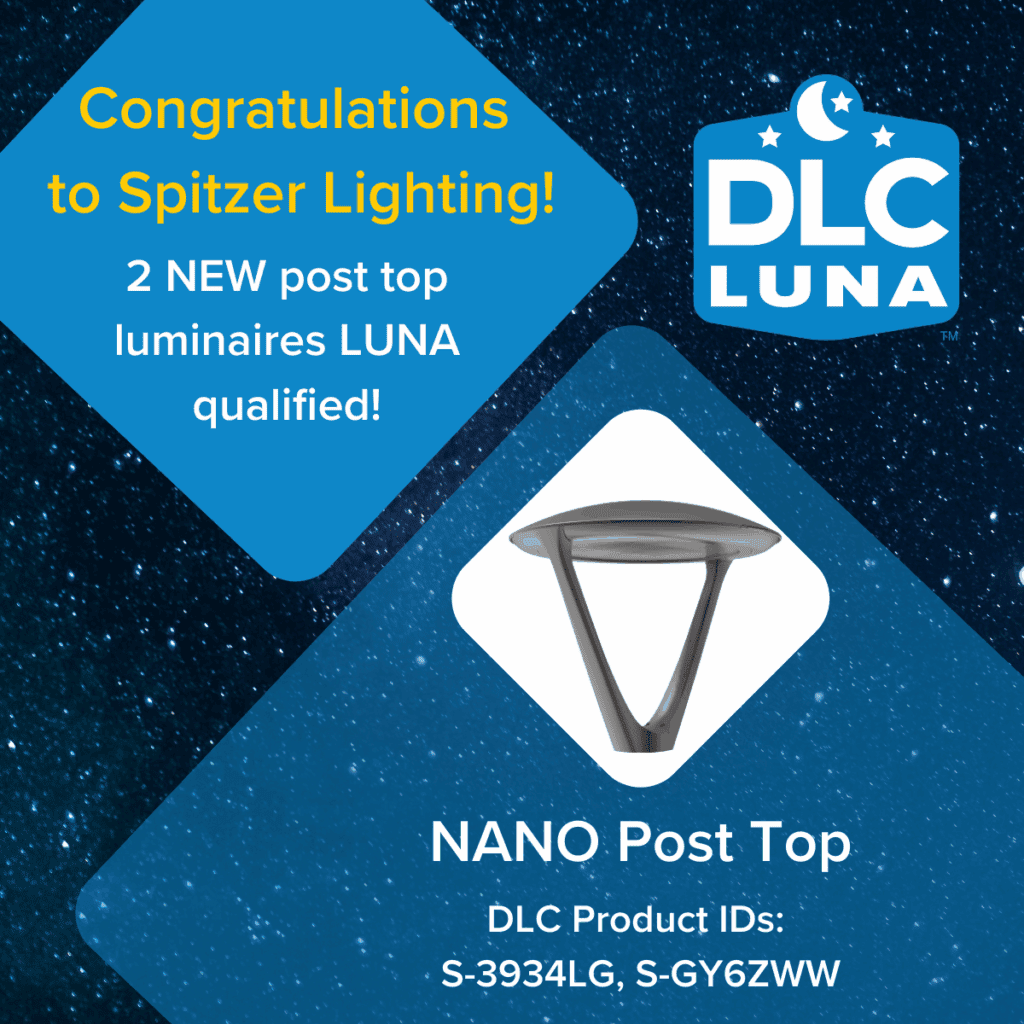
The DLC celebrates and recognizes manufacturers for their commitment to mitigating light pollution when new products are listed on the LUNA QPL.
LUNA Choices Help Communities
LUNA-listed products meet all the efficacy, reliability and controllability thresholds of the DLC’s LED/Solid-State Lighting (SSL) technical requirements, while giving municipalities, energy efficiency programs, and outdoor lighting decision makers confidence in their lighting choices. From its start, LUNA has facilitated the selection of outdoor lighting that achieves several community objectives:
- Saving energy (and money)
- Improving quality of life in neighborhoods by avoiding excessive or misdirected nighttime lighting
- Reducing carbon emissions
- Reducing light pollution that can harm local wildlife
- Preserving the night sky for stargazers and astronomers.
What’s New in LUNA V2.0
Released on November 3 as part of a larger revision of the DLC’s Solid-State Lighting technical requirements (SSL V6.0), LUNA V2.0 includes several updates and reflects comments the DLC received during a year-long stakeholder engagement process and input from our LUNA Advisory Group. Highlights of LUNA V2.0 include:
- Amber and very low correlated color temperature (CCT) LEDs are now eligible for the QPL, expanding the scope of products
- More product types eligible for the LUNA QPL, including turtle lighting, solar powered luminaires, lamps, and retrofit kits
- Support for additional light pollution metrics, including those designed to reduce impacts in sea turtle habitats.
- Simplified color testing requirements to simplfy testing needs for manufacturers
- The DLC’s recent revisions also address the lack of industry consensus standards for Amber LEDs for general illumination. The new SSL and LUNA technical requirements include definitions for three categories of Amber LEDs (direct-emission (de-) Amber, phosphor-converted (pc-) Amber, and filtered Amber LEDs).
Related to this, LUNA V2.0 allows new turtle lighting product types on the QPL, facilitating compliance with lighting ordinances in communities with sensitive coastal ecosystems. This addition to the LUNA QPL supports selection of de-Amber LED outdoor lighting that performs better in terms of energy efficiency and controllability and limits uplight, high-angle light, and total light output to prevent the disorientation of sea turtles.
LUNA V2.0 and Energy Program Rebates
Overall, LUNA V2.0 makes more products eligible for DLC listing, addresses coastal and light pollution concerns, and streamlines the product qualification process for manufacturers. Importantly, it also promotes better product adoption by allowing Amber and low CCT products that meet LUNA’s criteria for light pollution mitigation to qualify for the QPL even if their efficacy (i.e., lumens/watt) is lower than is required for general use LED luminaires. This will enable rebate eligibility for community- and ecosystem-friendly products that meet higher quality of light criteria.
Utilities and energy efficiency programs across North America rely on DLC technical requirements to guide which products are eligible for energy efficiency rebates. Recently, the utility Ameren Illinois has begun requiring LUNA qualification for their Dark Sky LED Exterior Fixtures rebate. These new incentives apply to 2026 energy efficiency programs and signify a meaningful step toward reducing light pollution across Southern Illinois while supporting high-performance, energy-efficient outdoor lighting. We commend Ameren IL for their leadership—and we hope other utilities will explore similar measures in their programs.
The DLC’s LUNA program encourages adoption of outdoor LED lighting that adheres to a science-based set of policy objectives shown to mitigate the impacts of light pollution. With growing awareness of how light pollution contributes to unnecessary energy costs and causes harm to local communities and habitats, the DLC is excited to offer LUNA V2.0 as an updated resource for local planners, procurement officers, and other lighting decision makers seeking high quality outdoor lighting options that save energy and improve the environment for communities and ecosystems alike.
Further Reading and Watching


© 2025 DesignLights Consortium. The DesignLights Consortium is a project of Efficiency Forward, Inc., a non-profit 501(c)3 organization. Privacy Policy Terms of Use